
About Yamaguchi
Yamaguchi Prefecture occupies the westernmost tip of Honshu, with coastlines on both the Seto Inland Sea to the south and the Sea of Japan to the north, and the Kanmon Strait connecting to the island of Kyushu at its western extremity. This strategic position made Yamaguchi historically significant as a transit point between the ancient capitals and the Korean peninsula, and it became an unexpected center of progressive thought in the final years of the Tokugawa shogunate.
The Choshu domain, centered on what is now Yamaguchi City, was one of the two leading forces behind the Meiji Restoration that overthrew the shogunate in 1868. Many of Japan's most influential early Meiji leaders — including four prime ministers — were born in Yamaguchi, and the prefecture's pride in its revolutionary heritage is visible in museums, monuments, and the carefully maintained schoolhouse of the teacher and revolutionary Yoshida Shoin, who inspired a generation of reformers before his execution at age 29.
Shimonoseki, at the prefecture's western tip, is Japan's leading fugu (pufferfish) port and the only city in Japan permitted to serve fugu liver — the most toxic and therefore most regulated part of the fish. The fish market at Karato is famous for its early-morning tuna and fugu auctions, and the restaurants along the market's edge offer every conceivable preparation of fugu: sashimi sliced paper-thin and fanned across a dish, hot pot, deep-fried karaage, and grilled fins in warm sake.
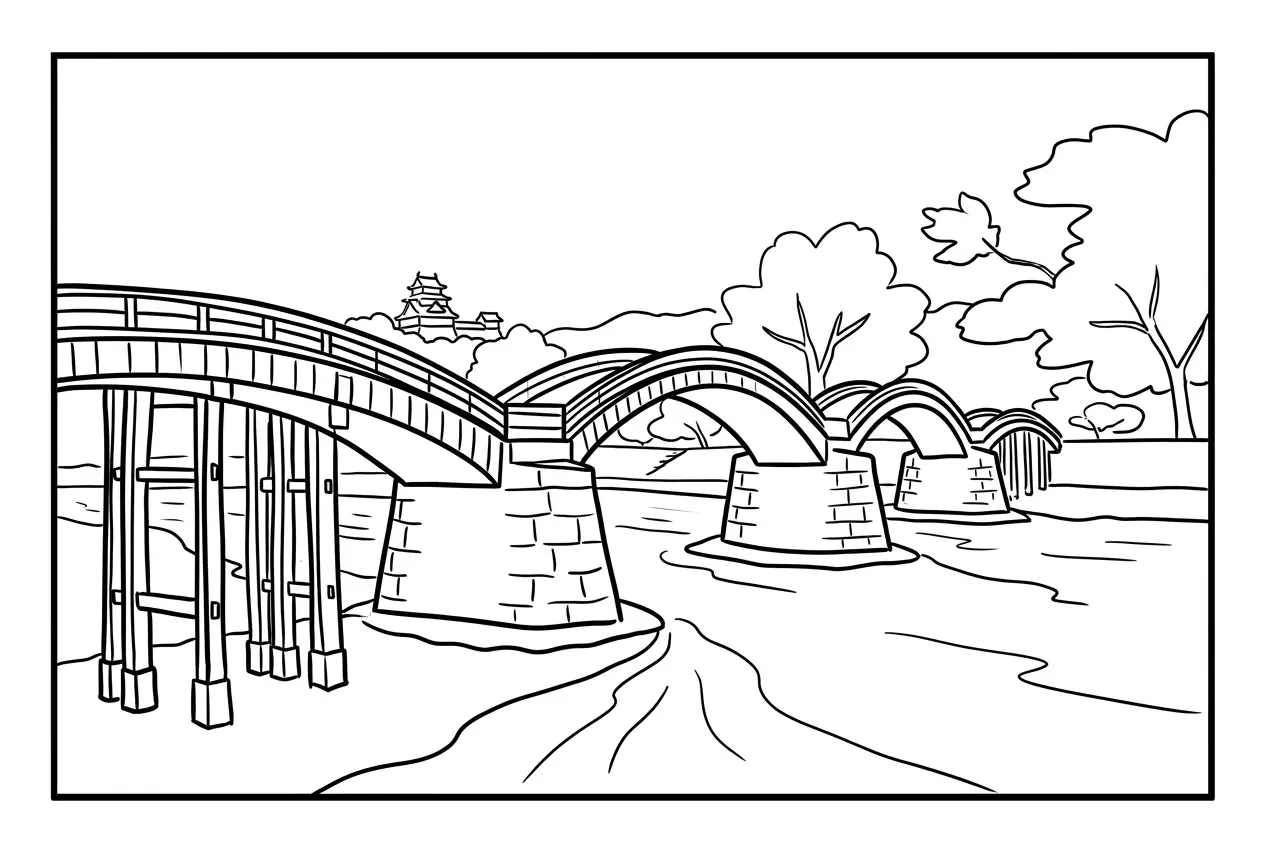
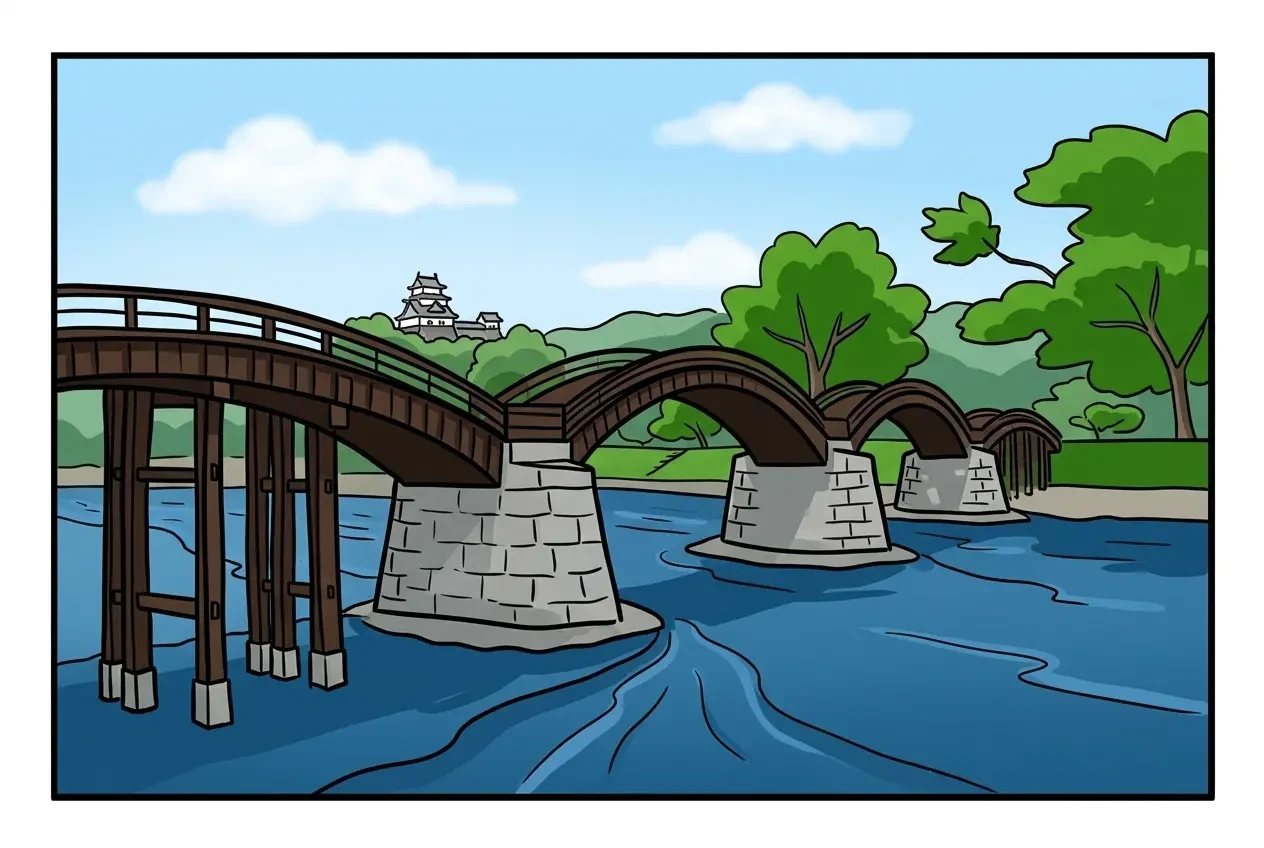
Featured Spot: Kintaikyo Bridge
Kintaikyo Bridge spans the Nishiki River at Iwakuni in five graceful wooden arches designed to withstand the river's powerful seasonal floods. First built in 1673 on orders of the Iwakuni domain lord, the bridge was destroyed and rebuilt multiple times before the current structure — authentically reconstructed using traditional joinery techniques without nails — was completed in 1953. The bridge is only slightly shorter than two Olympic swimming pools and uses sophisticated interlocking woodwork that distributes stress across the entire structure. The surrounding park is Yamaguchi's premier cherry blossom site in spring.
What to Experience
- Cross the five-arched Kintaikyo wooden bridge, Japan's most beautiful river crossing
- Descend into Akiyoshido, one of Japan's largest and most dramatic limestone caves
- Taste fugu (pufferfish) sashimi and hot pot in Shimonoseki, Japan's fugu capital
- Watch the Kanmon Strait's powerful tidal currents from the Moji-Shimonoseki bridge
Best Seasons to Visit
Spring (March–April) is the prime season — Kintaikyo Bridge is framed by 3,000 cherry trees along the Nishiki River in a spectacle that draws visitors from across western Japan. Autumn (October–November) brings colorful foliage to the riverside and mountain areas. Summer is the season for Akiyoshido cave exploration (naturally cool inside year-round) and coastal activities. Winter's fugu season peaks from November through March when the coldest water produces the richest-tasting fish.