Hagoita (New Year Paddle) Coloring Page (1 of 4)
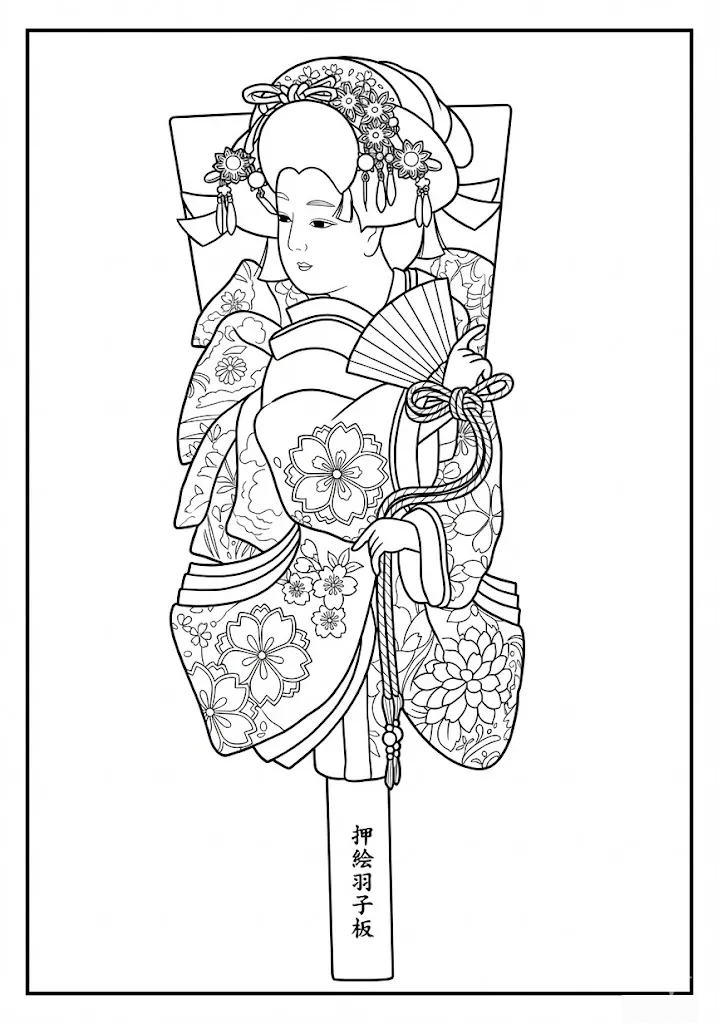
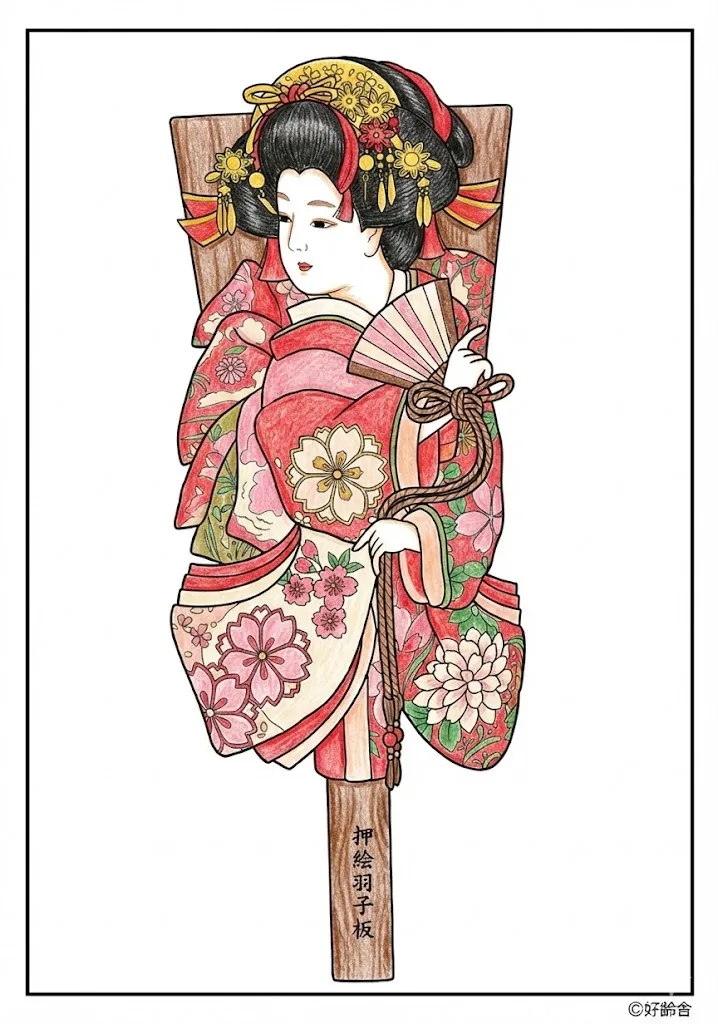
The hagoita is a beautifully decorated wooden paddle from Japan's New Year celebrations, traditionally used in a shuttlecock game played without a net. This one is dressed in fine kimono patterns and a painted face, and taking your time with each section turns it into a dazzling New Year decoration. Begin with the brighter colors and let the deeper shades follow.
Recommended coloring pages
About the Hagoita
The hagoita is a decorated wooden paddle traditionally used in hanetsuki, a New Year's game a little like badminton but played without a net, where players bat a small feathered shuttlecock back and forth and try not to let it drop. The game goes back centuries in Japan, and over time the paddles themselves became treasured objects in their own right, especially the ornamental kind sold each December at outdoor markets called hagoita-ichi, set up in front of old temples such as Sensoji in Tokyo's Asakusa district. These display paddles are built up with padded fabric in raised relief, a technique called oshie, to form the faces and kimono of kabuki actors, geisha, and figures from folklore - each one closer to a small piece of textile art than a toy meant for play.
A decorated hagoita gives you plenty to color: a face rendered in fine, delicate lines, and a kimono patterned with layered florals, waves, or cranes across the padded surface. Try working through the kimono pattern section by section, saving the brightest reds, pinks, and golds for the design at the center so it draws the eye, then let the surrounding folds settle into softer or deeper tones for contrast. The face rewards a light, careful touch, while the plain wooden paddle shape around the border can stay simple or be finished in a warm brown, giving the eye a place to rest before it returns to all the detail in the middle. Because the pattern breaks down into so many small shapes, this is a good page for practicing slow, steady strokes.