
About Kagawa
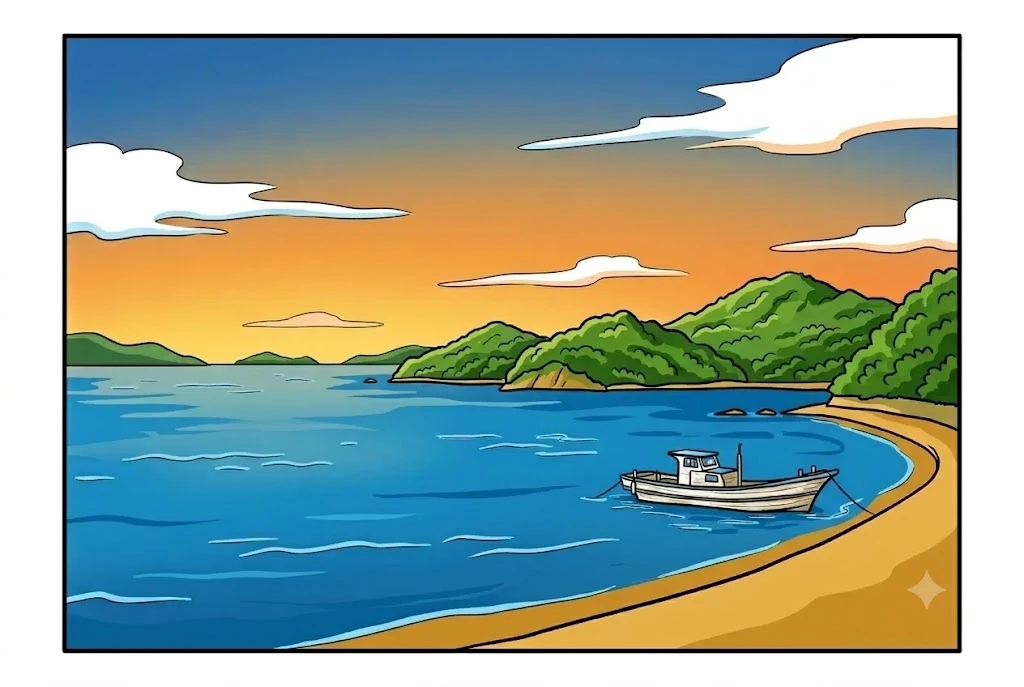
Kagawa Prefecture occupies the northeastern corner of Shikoku Island, separated from Honshu by the Seto Inland Sea — a sheltered body of water studded with islands, fishing ports, and bridge connections that link Shikoku to the main island. Kagawa is Japan's smallest prefecture by area, yet it concentrates remarkable cultural depth into its compact territory.
Sanuki udon noodles — thick, chewy wheat noodles served in a simple dashi broth — are Kagawa's defining culinary contribution to Japan. The prefecture's soft water and soft wheat produce a texture unlike udon made anywhere else, and the udon culture here borders on religious. There are over 700 udon restaurants in Kagawa, some open only for breakfast, others operating from living rooms where the owner's family passes through the queue. The proper order of operations — dipping versus soup, adding tempura, choosing temperature — is a matter of serious regional pride.
Naoshima, a small island in the Seto Inland Sea accessible by ferry from Takamatsu, has transformed itself from an industrial site into one of the world's most celebrated contemporary art destinations. The Benesse Art Site, conceived by publisher Soichiro Fukutake, commissioned world-class architects including Tadao Ando to design underground museums, island-integrated installations, and art hotels that blend seamlessly into the fishing village environment. Yayoi Kusama's polka-dot pumpkin sculptures on the island's pier have become Japan's most recognizable contemporary art image.
Featured Spot: Ritsurin Garden
Ritsurin Garden, one of Japan's most carefully crafted landscape gardens, was developed over 100 years by successive lords of Takamatsu domain from the early 17th century. Though not officially listed among Japan's three 'great gardens,' it is considered by many garden scholars to surpass them in design sophistication. The garden's southern section, centered on six ponds and thirteen hills, uses borrowed scenery from the forested Mt. Shiun to create an illusion of infinite depth. The northern section contains a more naturalistic landscape of lotus ponds and woodland. Over 1,400 hand-trained trees — some manipulated over centuries into extraordinary sculptural forms — populate the garden.
What to Experience
- Slurp authentic Sanuki udon at a local counter restaurant in rural Kagawa
- Take the ferry to Naoshima art island and explore its underground Tadao Ando museums
- Stroll Ritsurin Garden's sophisticated landscape of six ponds and trained trees
- Complete a section of the 88-temple Shikoku Ohenro pilgrimage circuit
Best Seasons to Visit
Spring (April–May) is magnificent at Ritsurin Garden when wisteria, iris, and cherry blossoms sequence through the garden. Autumn (October–November) brings spectacular foliage and the best weather for Naoshima island-hopping. Summer's Triennale art festival (held every three years) animates the Seto Inland Sea islands. Winter is mild and ideal for unrushed udon crawling through the countryside.