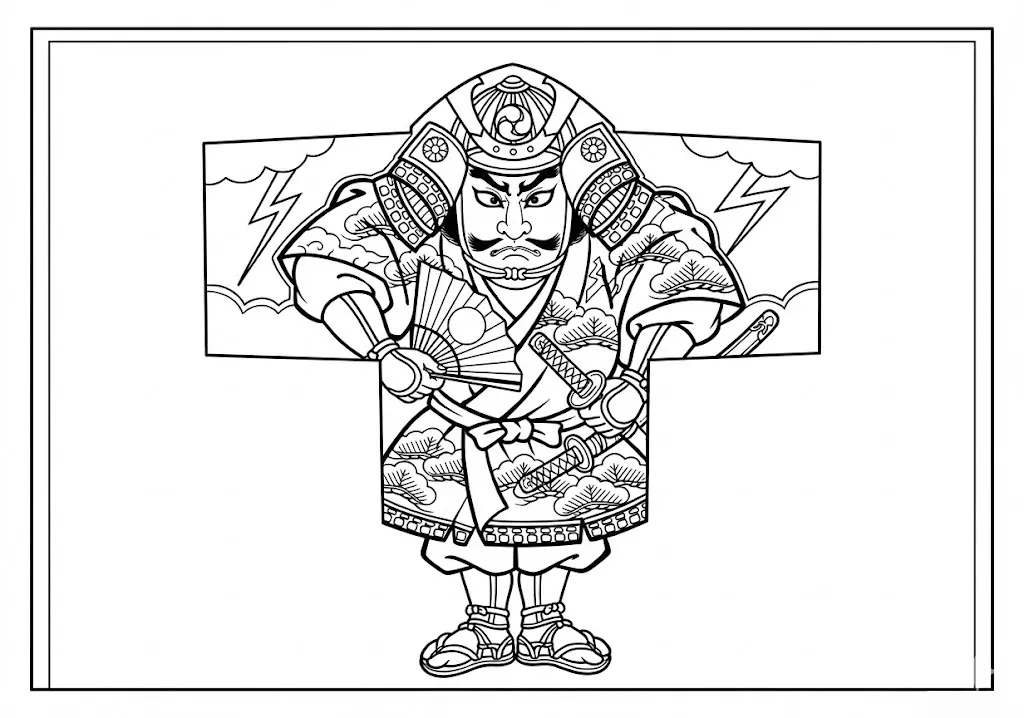
Yakko Kite (Traditional Servant-Shaped Kite) Coloring Page
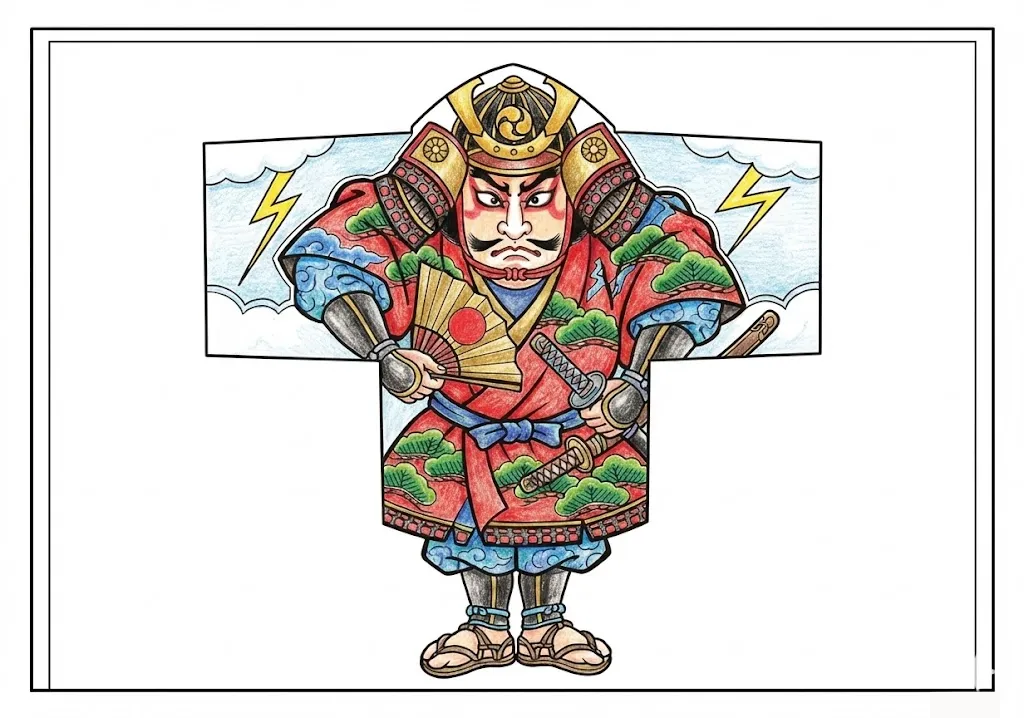
This cheerful Yakko kite has been a favorite New Year's toy in Japan since the Edo period, its arms flung wide and its face fixed in a comically stern scowl. Picture it soaring high against a winter sky as you color it in, and try the traditional black, red, and white palette for that spirited, old-fashioned festival look.
Recommended coloring pages
About the Yakko Kite
The Yakko kite takes its name and shape from the "yakko," a foot soldier or personal attendant who served in a samurai household during Japan's Edo period (1603-1868). These attendants wore a uniform with wide, stiff sleeves that stuck straight out to the sides as they marched, and kite makers turned that unmistakable silhouette into one of Japan's most recognizable kite designs: a flat rectangular body with two arm-like flaps jutting out, topped with a round head and a deliberately fierce, almost comical expression. Kite flying itself became especially popular as a New Year's pastime in Japan, when open winter fields, brisk winds, and the start of a new year made it a natural time for children and families to send kites soaring, partly for fun and partly as a small wish for good luck in the months ahead. Because its shape was so bold and simple to build, the Yakko kite spread quickly and has remained a familiar sight at New Year's kite-flying events and craft fairs ever since.
Part of what makes this design so satisfying to color is its graphic simplicity: a flat body, two outstretched arm panels, and a round face with sharply drawn eyebrows and a stern little frown. Traditional Yakko kites are painted in a bold, high-contrast palette of black, red, and white, so filling in those big panels with confident, unmixed blocks of color right away gives the page that crisp, old-fashioned festival look. The wide shapes and thick outlines make this a comfortable page for hands that prefer larger areas to fill, while the small facial details offer a bit of finer work for anyone who wants it. Since the design is symmetrical, coloring one arm and then matching the pattern on the other side also makes for a gentle, satisfying bit of visual memory practice.