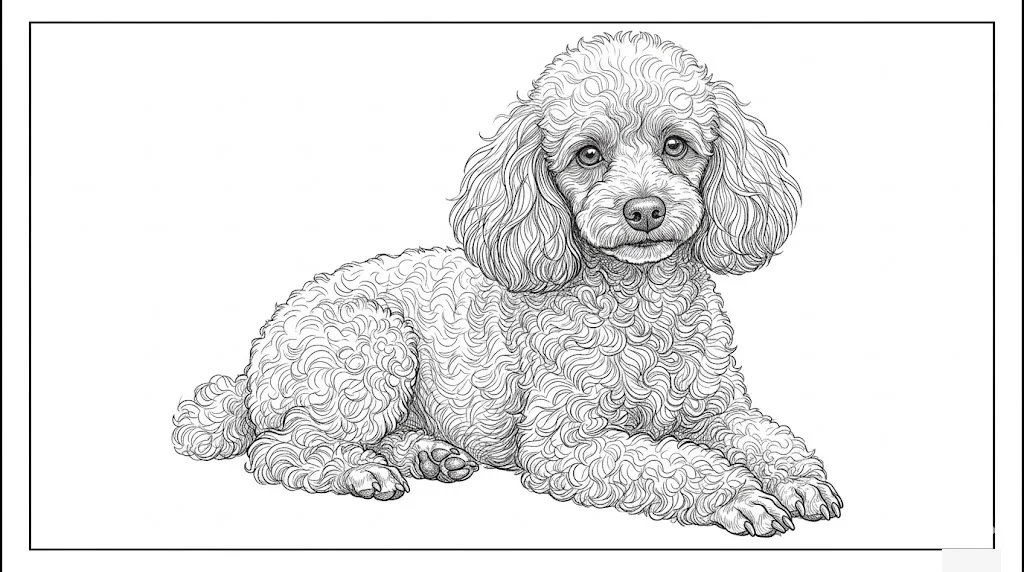
Toy Poodle Coloring Page
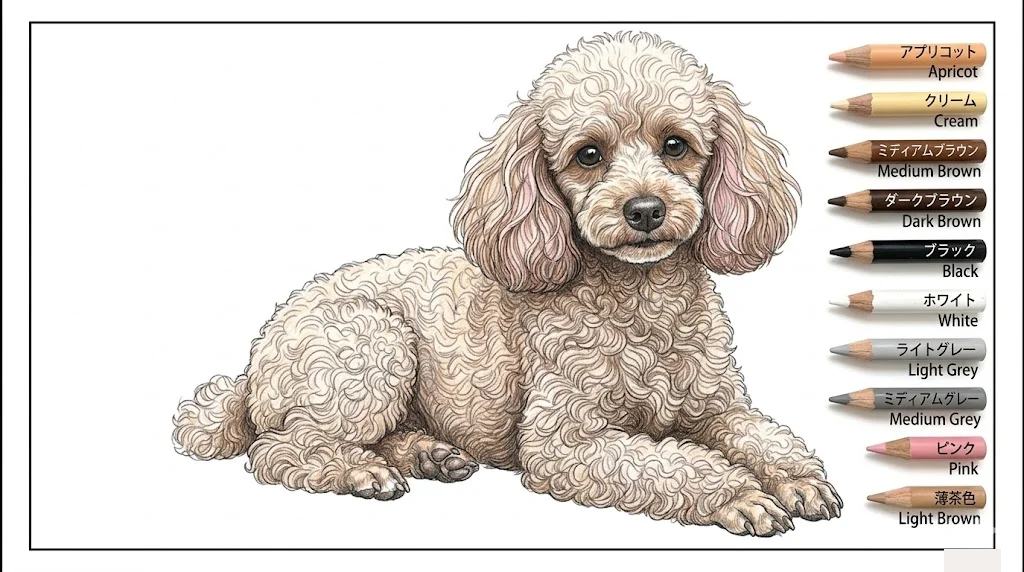
Toy Poodles are adored for their springy, curling coat and their sweet, stuffed-animal charm, and this coloring sheet brings out both. The trick to those curls is to picture them as many small round clusters of fur rather than flat patches — coloring them that way is what gives the coat its soft, plush look. It is a coloring page well suited to senior activities, care facilities, day services, and brain training, and it prints free on A4 paper.
Recommended coloring pages
About the Toy Poodle
The Poodle's tight, curling coat is not just decorative — it started as working gear. Long before poodles became fashionable lapdogs, their ancestors were bred in Germany and France as water retrievers, prized for swimming out into cold lakes and rivers to fetch waterfowl for hunters. Their dense, curly fur trapped air and kept them warm in the water, and the famous "Continental clip," with shaved hindquarters and pom-poms of fur left at the joints, was originally meant to protect a working dog's joints and organs from the cold while leaving its legs free to paddle. Over generations, breeders developed smaller versions of the poodle — the Miniature and, eventually, the Toy — bred purely as companions rather than hunting partners. Today the Toy Poodle, the smallest of the poodle varieties, is one of the most popular companion breeds in the world, loved for its intelligence, its gentle nature, and a coat that many people with allergies tolerate better than most other breeds.
When coloring this sheet, the biggest difference from a short-haired dog is texture. Instead of shading in smooth strokes, try building up the coat with lots of small round scribbles or tiny loops, layered closely together, so the fur reads as a mass of soft curls rather than a flat surface. Toy Poodles come in many real coat colors, so there is no need to stick to just one shade — apricot, cream, tan, silver, black, and white are all natural choices, and mixing a couple of close shades can even suggest the way light catches a curly coat. Leave the eyes large, round, and dark, and keep the long floppy ears and the little button nose smooth and glossy in contrast to the curly body. That contrast between fluffy texture and smooth features is exactly what gives the finished picture its stuffed-animal charm.