
Tanuki Statue (Lucky Raccoon Dog Figure) Coloring Page
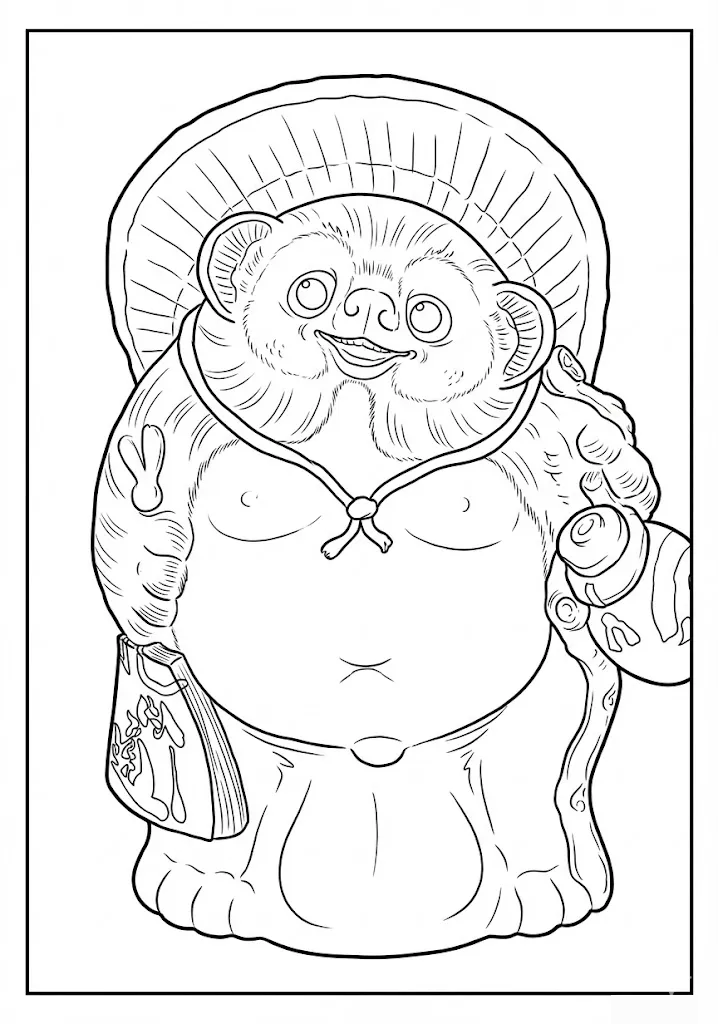
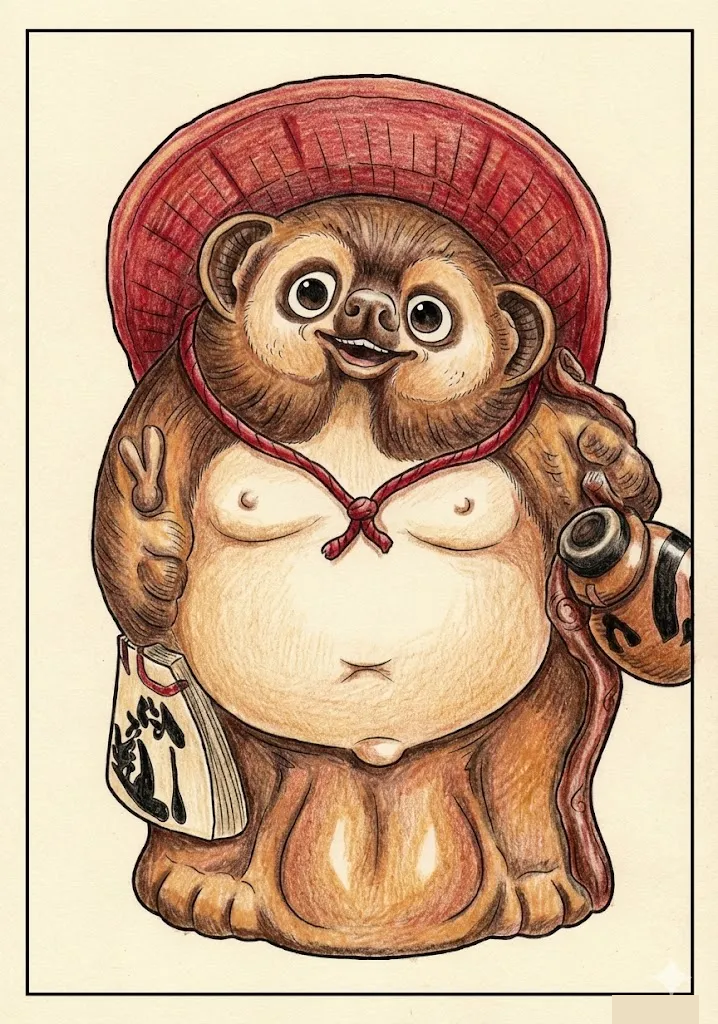
Meet the tanuki statue, with its warm, mischievous smile and that unmistakable round belly. In Japanese, the animal's name sounds like the phrase "to get ahead of the rest," so for generations people have kept one of these figures by their door or shop entrance to invite good fortune and business success. Coloring it in soft, layered shades of brown brings out the look of the unglazed pottery it's traditionally made from, and it's a relaxing, feel-good page to work on, well suited to senior activity groups, care facilities, day services, and anyone looking for a little gentle brain training. Print it free on standard A4 paper and enjoy bringing a bit of luck to the page.
Recommended coloring pages
About the Tanuki Statue
The tanuki, or raccoon dog, is a real animal native to Japan, but the round-bellied statue seen outside shops, restaurants, and homes comes from a specific place: Shigaraki, a small town in Shiga Prefecture that has fired pottery for over a thousand years and is counted among Japan's Six Ancient Kilns. Local potters began shaping tanuki figures from the area's reddish-brown clay in the 1800s, dressing them in a straw hat and a short happi coat and giving them a large sake flask to hold. The statue's popularity took off nationwide in 1951, when the Emperor visited Shigaraki and was greeted by rows of tanuki figures waving small flags along the road; news of the charming scene spread across the country and made the statue a household symbol almost overnight. Part of its enduring appeal is a simple play on words: the Japanese word for raccoon dog, tanuki, can be read as "to surpass others," so shopkeepers place one by the door hoping it will help their business outdo the competition. Nearly every detail on the figure carries its own meaning as well: the wide straw hat is said to protect against bad luck and bad weather, the big round eyes stand for careful judgment, the sake bottle for good virtue, the ledger book tucked under one arm for trustworthy dealings, the sturdy tail for a steady footing in life, and the big belly for calm, bold decision-making.
This particular tanuki keeps all of its trademark features in bold, easy-to-follow outlines: the tall pointed hat, the round friendly face, the sake bottle in one paw, the little account book in the other, the broad belly leading the eye down to a thick, curled tail. Because the real statues are almost always unglazed stoneware straight from the kiln, the most authentic and satisfying way to color this page is to stay in the brown and tan family rather than reaching for bright colors: a light tan or ochre for the straw hat, a warm reddish-brown for most of the body, and then a slightly darker brown worked into the folds of the belly, the underside of the arms, and around the tail to suggest the shadows of the fired clay. That kind of layered shading, going over the same area two or three times with a slightly heavier hand each time, is a gentle way to practice pressure control and blending. The eyes, eyebrows, and the rim of the sake bottle can be picked out in black or a very dark brown for contrast, which helps the cheerful expression stand out even for those who prefer to keep the rest of the coloring simple.