Japanese Doll Coloring Page
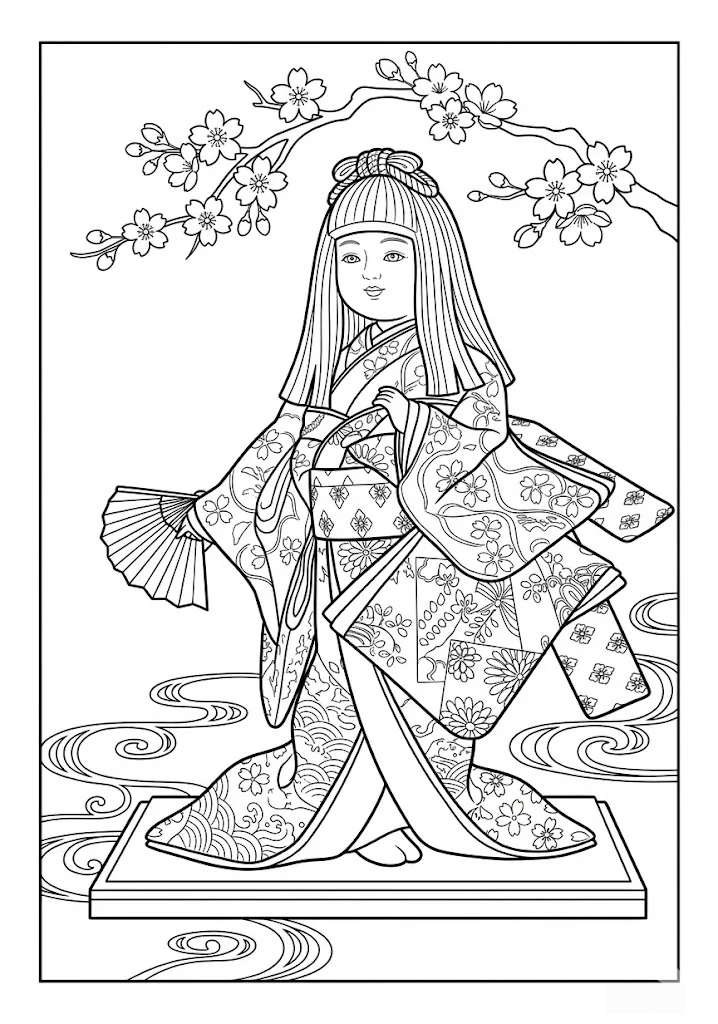
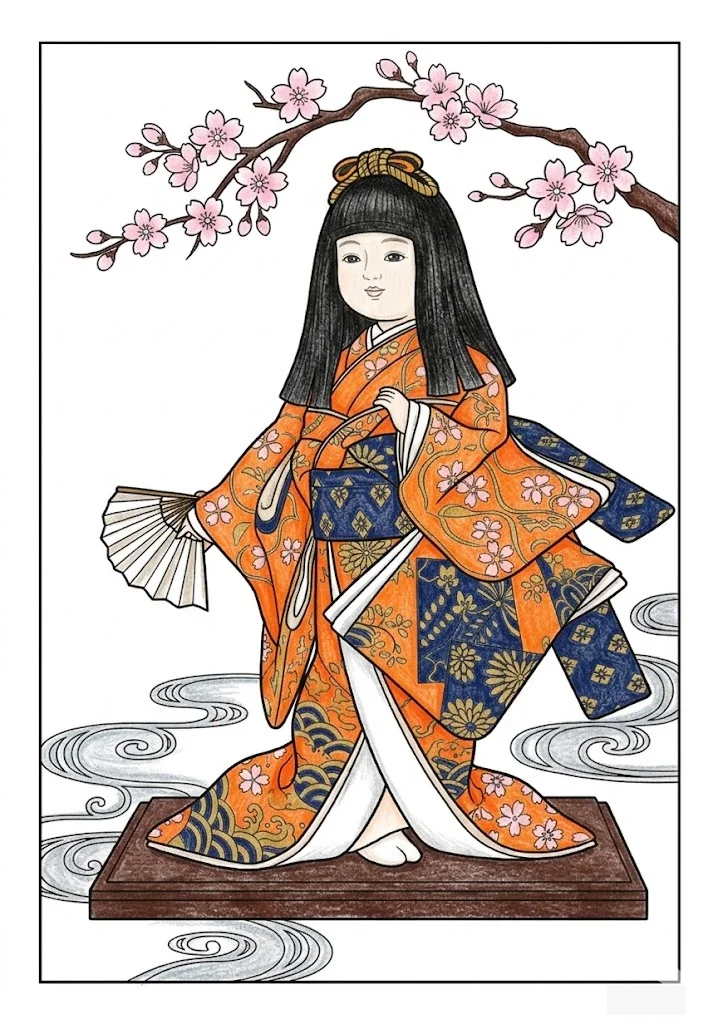
This lovely Japanese doll, dressed in a flowing silk kimono and seated with quiet elegance, is a fine example of a traditional Japanese craft. Soft, calm colors in the robe let the delicate beauty of her seated pose really shine through. It's a coloring page well suited to senior activities, care homes, day services, and brain training, and it prints out beautifully on A4 paper at no cost.
Recommended coloring pages
About the Japanese Doll
Japan's tradition of doll making, known as ningyo, stretches back well over a thousand years, growing out of old Shinto purification customs in which simple paper or straw figures were used to absorb a person's bad luck and were then set afloat on a river. Over the centuries this practice grew into a refined art form: skilled craftspeople began carving doll bodies from wood and finishing the face and hands with gofun, a smooth white paste made from crushed shells, then dressing the finished figure in layered silk kimono sewn by specialists in miniature tailoring. Some ningyo were made for specific seasonal festivals, such as the hina dolls displayed for Girls' Day in March or the armored warrior dolls set out for Boys' Day in May, while others, like this graceful seated figure in her flowing robes, were created simply as display pieces, meant to be admired for their artistry and quiet composure and often kept in a family for generations or given as a gift to mark a special milestone.
This sheet gives you a good range of surfaces to work with. The doll sits with her hands folded neatly in her lap, and her kimono falls around her in soft, rounded folds, almost like the petals of a flower just opening. Traditional kimono are often put together in rich, layered color combinations, so it is worth trying a deep red, plum, or indigo for the main outer robe and then letting a contrasting collar or inner layer show through in gold, cream, or pale blue. The obi sash tied at her waist and her neatly upswept hair are nice spots to add a little extra pattern or gentle shading once the larger areas are filled in. Moving back and forth between the broad, smooth folds of the robe and the smaller, more careful details around the face and hands offers a gentle change of pace and grip, which is exactly the kind of variety that makes a sheet like this well suited to a brain-training or fine motor coloring session.