
Hotei (The Laughing Buddha) Coloring Page
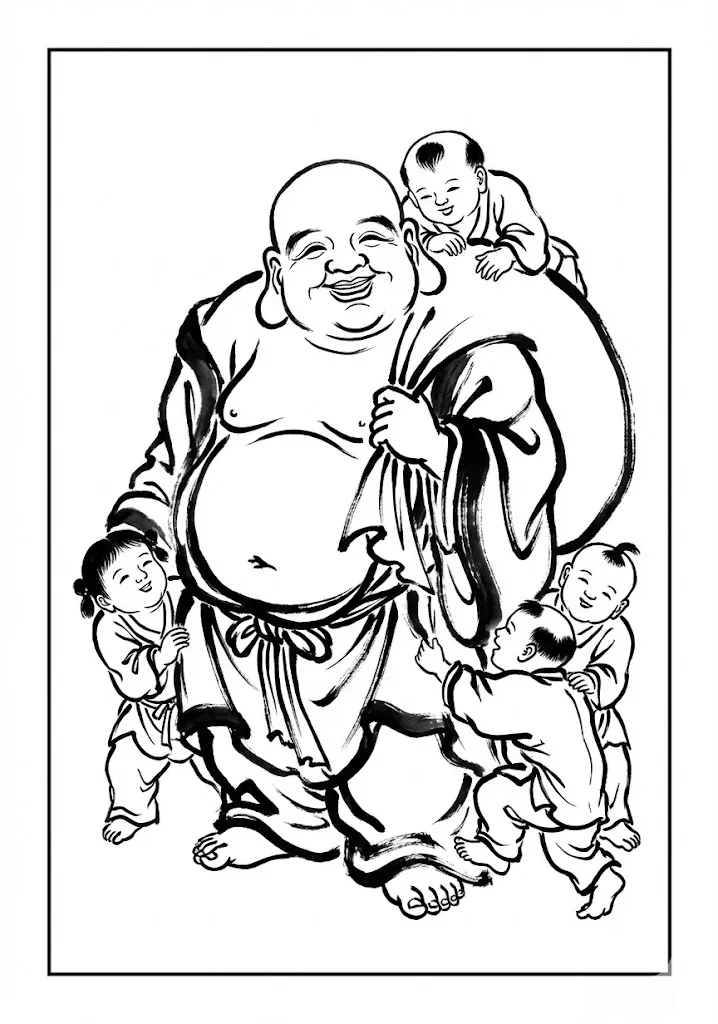
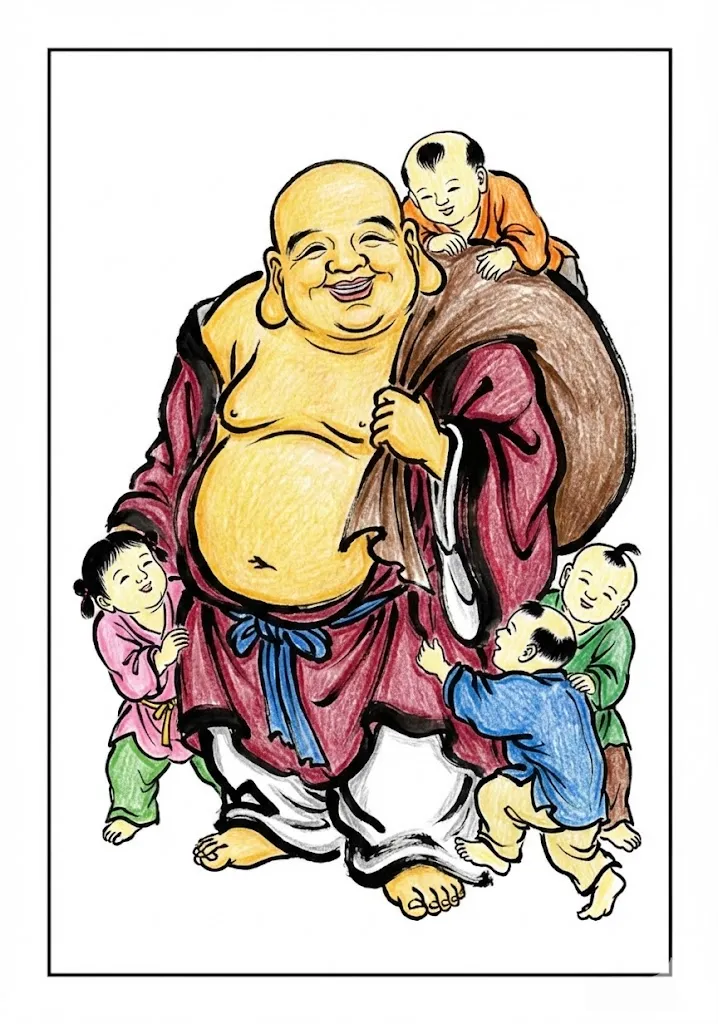
Meet Hotei, the good-luck god said to bring laughter to the household and harmony to marriage. His round, ample belly and wide, easy grin are his best-loved features, and coloring him in a warm, generous spirit is really what suits a good-luck charm like this. It's a lovely coloring page for seniors' recreation, care facilities, day services, and brain-training alike, and it prints free on standard A4 paper.
Recommended coloring pages
About Hotei
Hotei began as a real person — a wandering Chinese Zen monk of the tenth century named Budai, whose name means "cloth sack," after the bulging bag he carried everywhere over one shoulder. He wandered from village to village, sharing whatever was inside it — food, sweets, small trinkets — with children and the poor, and he was known for laughing far more often than he spoke. After his death, people began to say he had secretly been an incarnation of Miroku, the Buddha of the future, and both his image and his "sack of never-ending plenty" became lasting symbols of generosity, contentment, and abundance. Centuries later, Japan folded him into the Seven Lucky Gods (Shichifukujin), a set of good-luck deities said to arrive together each New Year aboard a treasure ship, and he is the only one of the seven based on an actual historical figure. Outside Japan, he is probably the most recognizable face in the whole group: the round, beaming figure often called the "Laughing Buddha," familiar from gift shops and restaurants worldwide — not the historical Buddha himself, but this separate, much later folk figure of good humor and good fortune.
Hotei's design gives a coloring page a nice range of textures to work with. His bare, rounded belly and broad chest are wide, open curves, well suited to laying down color smoothly or practicing a gentle light-to-dark shade — an easy, low-pressure stretch for the hand and wrist. His face asks for the opposite kind of care: a small area, but a busy one, with crescent-shaped closed eyes, full round cheeks, and a wide, open laughing mouth that calls for a steadier hand and a little more concentration. The cloth sack slung over his shoulder and the folds of his loose robe sit in between, offering curved lines to follow and, if you like, a pattern to invent across the sack's surface. Moving back and forth between these broad, fine, and in-between areas is a gentle, natural way to keep fingers limber and attention engaged, which is exactly why a page like this works well as a simple hand-rehabilitation or brain-training exercise, whether colored alone at home or together in a care setting.