
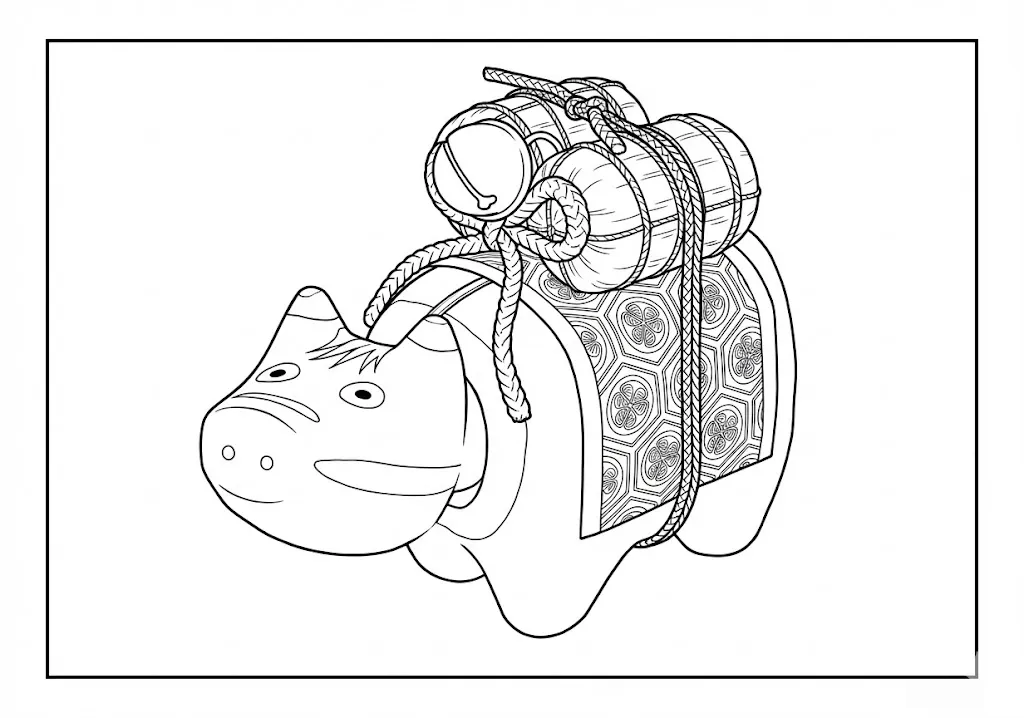
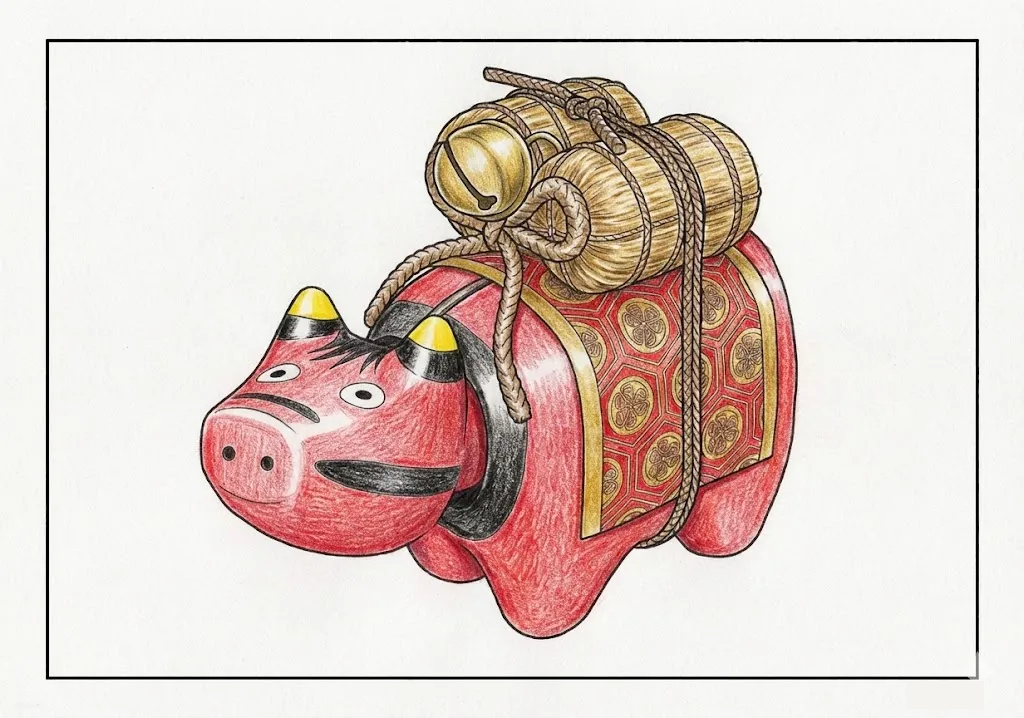
Akabeko (Lucky Red Cow) Coloring Page
Meet the akabeko, a beloved red cow toy from the Aizu region of Fukushima that has charmed children and grown-ups alike for generations, its little head always ready to nod along. Traditionally believed to protect against illness and bless children with good health, this gentle cow is usually painted a lively red with bold black-and-white accents, but feel free to make it your own with any colors you like.
Recommended coloring pages
About the Akabeko
The akabeko is a papier-mâché folk toy from the Aizu region of Fukushima Prefecture in northern Japan, shaped like a stout little cow whose head bobs gently on a string whenever it is touched. According to local legend, a red ox helped carry the heavy timber used to build a temple in the town of Yanaizu more than a thousand years ago, working so faithfully that it was honored afterward with a shrine of its own. Centuries later, during a smallpox epidemic in the Edo period, parents began giving their children red cow toys in the belief that the color red could help ward off the disease, and the akabeko became a lasting charm for health and safe growth. Today it is one of Japan's most recognized folk crafts, and after the 2011 earthquake and tsunami struck the Fukushima coast, it also took on new meaning as a quiet symbol of the region's resilience and recovery.
For coloring, the akabeko's charm lies in its bold, simple shapes, which make it a relaxing subject at any skill level. The body is traditionally painted a warm red, set off by thick black outlines and swirling black floral patterns, sometimes called botan or peony motifs, along the flanks and legs; these curling shapes are a good spot to slow down and add detail with a fine-tipped pen or pencil. Black and white spots often mark the neck and face, and the wide, round eyes with their thick lashes give the toy its gentle, good-natured expression, so it is worth keeping a little contrast there even while filling in the rest more freely. There is also no need to stick to tradition: trying the akabeko in soft pastels, blues, or even a patterned coat can turn a familiar shape into a fresh little puzzle, which is part of what makes it a nice light exercise for memory and attention on a return visit.