
About Miyazaki
Miyazaki Prefecture faces the Pacific Ocean along Kyushu's eastern coast, its subtropical climate nurturing palm-lined avenues, flower farms, and one of Japan's warmest year-round swimming seasons. But beyond its 'Phoenix Coast' resort image, Miyazaki conceals some of Japan's most mythologically significant landscapes — places described in the Kojiki (Japan's oldest chronicle) as the birthplace of the Japanese islands and their gods.
Takachiho, in the mountainous interior, is where Japanese mythology places the Ama-no-Iwato — the cave into which the sun goddess Amaterasu hid, plunging the world into darkness. The Amaterasu-Omikami Jinja shrine and the cave site draw pilgrims seeking connection to Japan's foundational creation myths. Each night in Takachiho, traditional Kagura dance performances — depicting the story of luring Amaterasu from her cave with dance and music — are performed for visitors in a three-hour ceremony of extraordinary atmospheric intensity.
The Nichinan Coast stretches south from Miyazaki City in a series of dramatic rock formations, river canyons, and subtropical gardens. Aoshima Island, connected to the mainland by a sandbar and surrounded by 'Devil's Washboard' wave-erosion rock formations, is topped by a jungle-like tropical botanical garden. Cape Toi at the peninsula's southern tip is home to a population of wild Misaki horses, small descendants of ancient Japanese working horses that have lived free on the heathland clifftops for over 300 years.
Featured Spot: Takachiho Gorge
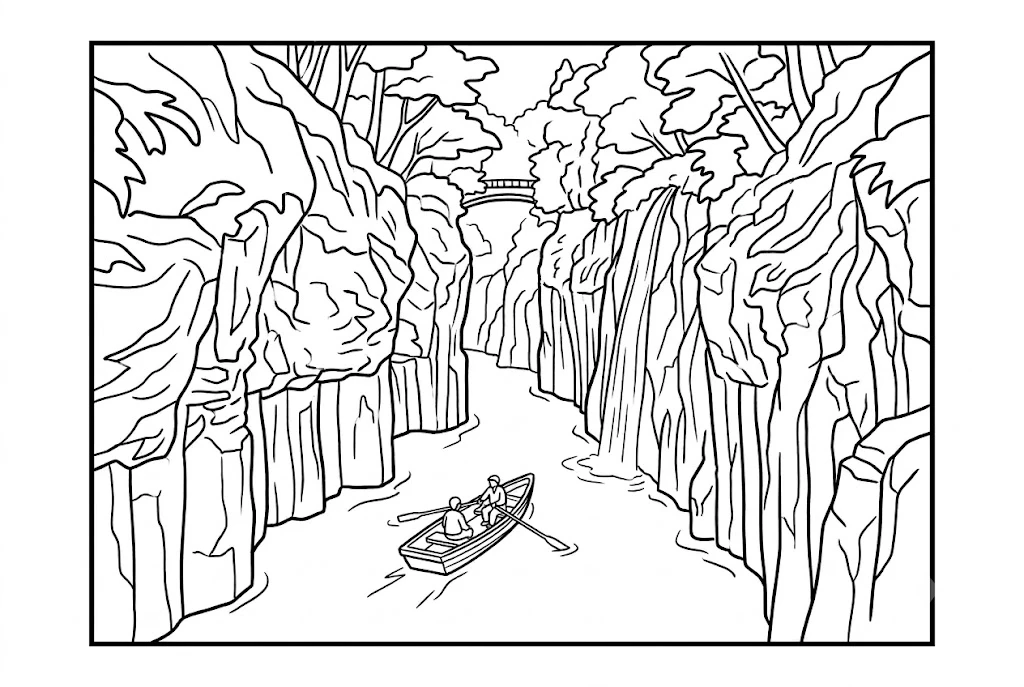
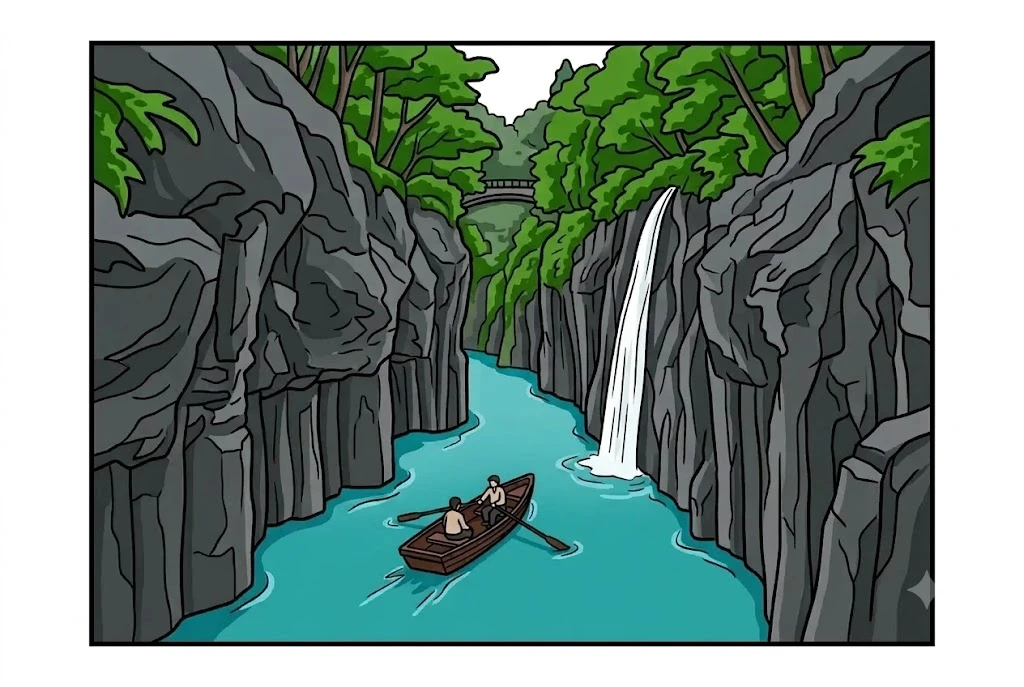
Takachiho Gorge was carved by the Gokase River through layers of columnar basalt formed by ancient volcanic eruptions, creating a narrow 80-meter-deep canyon of extraordinary geological and visual drama. The gorge's most famous feature is Manai Falls, cascading 17 meters into the shadowed gorge below — accessible by rowboat through the canyon for a dramatic close-up view from the water level. The gorge is simultaneously a place of great natural beauty and deep mythological significance, appearing in multiple passages of the 8th-century Kojiki as the landscape where the gods walked.
What to Experience
- Row a boat through Takachiho Gorge to see Manai Falls from below
- Watch a Kagura dance performance depicting Amaterasu's emergence from her cave
- Spot wild Misaki horses roaming free on the clifftops of Cape Toi
- Taste Miyazaki chicken nanban (fried chicken in sweet vinegar and tartar sauce)
Best Seasons to Visit
Summer (July–August) is ideal for Miyazaki's Pacific beaches and outdoor exploration of the gorge. Autumn (October–November) transforms Takachiho's mountains with vivid foliage and brings cooler temperatures to the interior. Spring offers pleasant hiking conditions and wildflower bloom across the highlands. Winter is mild on the coast, and the nightly Kagura performances at Takachiho's shrine are particularly atmospheric during the cold winter months when the performances traditionally occurred.